


Why Demand Gen works best alongside Performance Max for ecommerce

When Google launched Demand Gen campaigns in 2023, they were positioned as a way to build deeper engagement across YouTube, Discover, and Gmail.
At the time, they felt experimental, sitting between awareness and performance.
Since then, Demand Gen has improved significantly.
The creative flexibility and audience control now make it a campaign type I use regularly for ecommerce clients.
It has helped us scale revenue in a controlled way, maintaining brand consistency and enabling creative testing while still driving conversions.
In practice, Demand Gen converts best when it is set up strategically alongside Performance Max and Search.
Choosing control over automation
Demand Gen campaigns are best suited to advertisers who need more control.
One of the main challenges and criticisms of Performance Max is its lack of transparency and manual input.
When control over targeting, placements, or creative is a necessity, Demand Gen is the better option.
In Performance Max, ads are automatically built from the assets you upload, with Google’s AI testing and combining them to find what performs best.
This makes supplying strong creative assets nonnegotiable.
For instance, a fitness brand could set up multiple asset groups divided by product category – one for leggings, another for shorts, and another for vests.
This structure helps direct content toward relevant audiences, although true control remains limited.
By contrast, Demand Gen provides far greater flexibility.
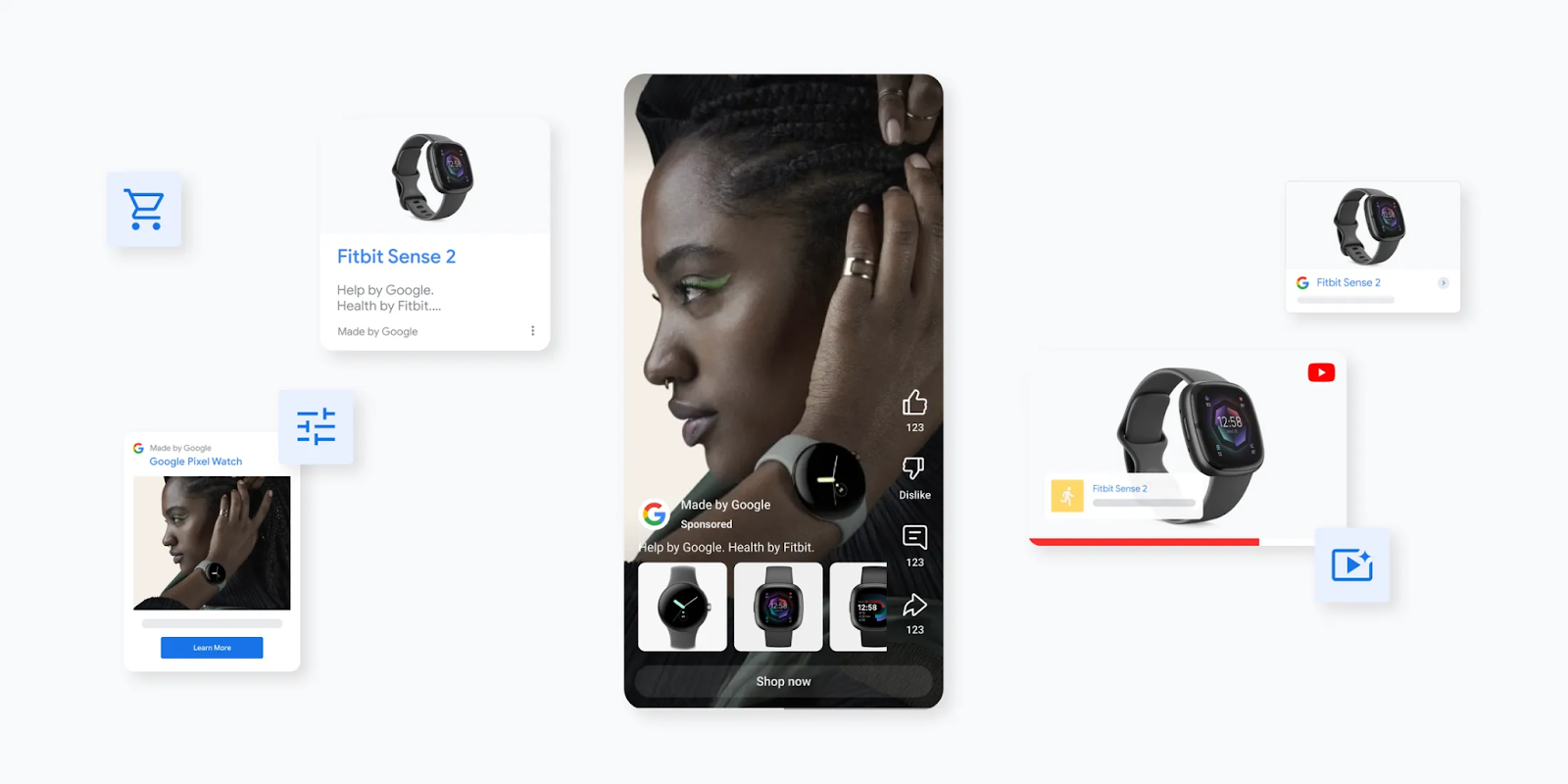
You can upload, preview, and edit ad combinations before launch, tailoring each creative for its placement.
For example, separate YouTube ads can be uploaded for in-feed, in-stream, and Shorts.
This level of control is ideal for ecommerce brands that value creative precision, message testing, and maintaining a strong visual identity.
Dig deeper: The Google Ads Demand Gen playbook
How Demand Gen and Performance Max work together
Running Demand Gen alongside PMax can be extremely effective when you understand how each fits within the customer journey. They complement each other rather than compete.
Demand Gen builds awareness and interest by engaging audiences higher in the funnel, often before they start actively searching for products.
Whereas, PMax focuses on converting lower-funnel users who are ready to buy.
For example, a fitness retailer might use Demand Gen to reach potential customers with lifestyle videos and discovery ads that showcase their latest activewear ranges.
Once that user begins researching or showing purchase intent, PMax steps in with tailored Shopping and Search placements to drive the sale.
You can also set up feed-only PMax campaigns, where you supply only a product feed within the asset group.
This restricts PMax activity to Shopping placements, keeping it focused on direct conversion opportunities.
Meanwhile, Demand Gen runs across YouTube, Gmail, Discover, and Shorts, covering the upper and mid-funnel with more visual, awareness-based creative.
This setup helps minimise overlap between campaign types while ensuring you reach users throughout the funnel, from brand discovery to final purchase.
For larger accounts with budget flexibility, this dual structure drives full-funnel performance and clearer attribution.
For smaller accounts, where efficiency is key, it’s usually best to master high-intent campaigns first and layer in Demand Gen once core conversions are stable.
This mix of campaign types means advertisers now have more flexibility than ever, but it also requires understanding how Google is reshaping its video and discovery products.
Dig deeper: Why Demand Gen is the most underrated campaign type in Google Ads
How Google reshaped visual campaigns
Since July 2025, Video Action Campaigns (VACs) have been replaced by Demand Gen.
The update brings Google’s visual placements together in one campaign type, including YouTube in-stream, Shorts, in-feed, Gmail, and Discover.
It’s a big shift. VAC performed well for ecommerce, particularly for conversion-focused video, so removing it clearly nudges advertisers toward Demand Gen.
The upside is that Demand Gen offers stronger creative control and more testing options across YouTube placements.
If you were running VAC, those campaigns now sit under Demand Gen.
Check that your top-performing assets and audiences migrated correctly, then use the new controls to refine performance.
Get the newsletter search marketers rely on.
See terms.
Where advertisers gain control with Demand Gen
Audience targeting
Audience control is one of the biggest advantages of Demand Gen and a key reason I use it for ecommerce.
With Demand Gen, you can build and manage audiences directly, choosing exactly who sees your ads.
You can select placements, combine audience types, and decide where your budget goes.
It’s also the only Google Ads campaign type that supports lookalike audiences, helping you reach new customers similar to your best converters.
For brands focused on acquisition quality, that is a major win.
Performance Max uses audience signals rather than fixed targeting, which is fine for scale but limits precision.
If you value control, testing, and segmentation, Demand Gen is the clear winner for audience strategy.
Channel control
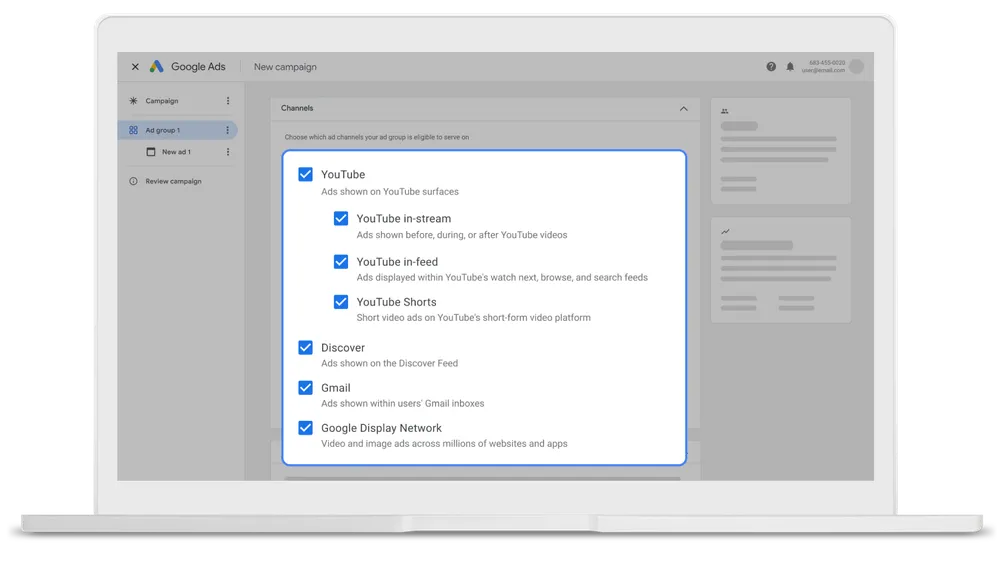
In June 2025, Google launched an open beta allowing advertisers to manually opt out of specific Demand Gen channels.
This means you can choose where your ads appear, for example, excluding Discover or YouTube Shorts if they do not align with your goals or creative format.
It is a small but meaningful update that gives advertisers more control, something that has been missing from many of Google’s automated campaign types.
Dig deeper: Google Ads rolls out channel control for Demand Gen campaigns
Product feeds
In early 2025, Google introduced product feed integration for Demand Gen campaigns, allowing advertisers to link their Google Merchant Center feed and pull live product data directly into visual ads.
For ecommerce, this bridges the gap between performance and branding.
You can tell your story through lifestyle-focused creative while still showcasing real products.
For example, a fashion retailer might promote a new collection in a video ad while displaying shoppable product cards underneath.
This update makes Demand Gen feel like a true hybrid between Shopping and Display, something ecommerce advertisers have been waiting for.
Budgeting for Demand Gen
Demand Gen typically requires more investment than other campaign types.
Google recommends starting at around £100 per day per campaign, or 20 times your target CPA/tROAS, whichever is higher.
In practice, the £100-per-day baseline is a sensible starting point for meaningful learning. Anything lower often limits data flow and slows optimization.
Demand Gen should be treated as part of your broader Google Ads mix, not a replacement for Search or PMax.
It is a more premium, visually led campaign type best for driving awareness that converts, especially when you already have reliable measurement, a clean product feed, and defined audiences.
Comparing Demand Gen and Performance Max
The table below compares Demand Gen and Performance Max across the areas advertisers care about most.
| Category | Winner | Details |
| Audiences | Demand Gen | Manual audience building and placement control. |
| Placements | Draw | PMax includes Search and Shopping (conversion-driven), while Demand Gen covers visual placements. |
| Reporting | Demand Gen | Greater transparency and creative-level insight. |
| Creative Control | Demand Gen | Full previewing and editing of ads before launch. |
| Control | Demand Gen | Ideal for advertisers who want to test and optimise manually. |
| Goals | Draw | Each has a distinct role in the funnel; both are valuable when aligned. |
Dig deeper: Google pushes Demand Gen deeper into performance marketing
Using Demand Gen to create demand and PMax to capture it
PMax does the heavy lifting for scale, but it can feel like a black box.
Demand Gen gives advertisers the control we have been asking for, genuine creative testing, audience precision, and placement visibility.
If you want to grow ecommerce sales in a more measured, brand-led way, start running both.
PMax captures demand. Demand Gen creates it.
Used together, they form a complete framework for scalable, sustainable growth.







Recent Comments