

Kirk Williams discusses why client fit is very important
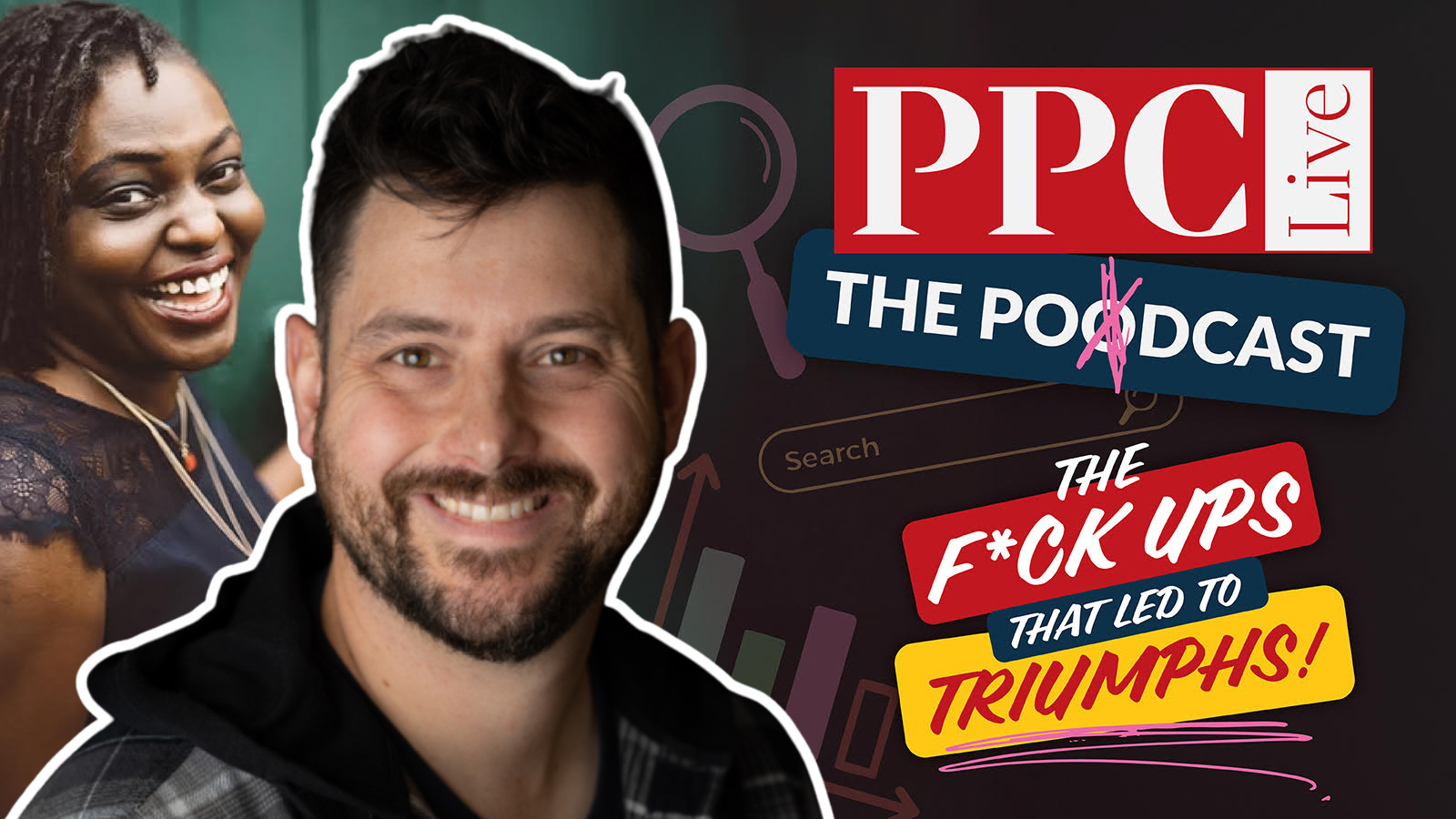
On episode 339 of PPC Live The Podcast, I speak to Kirk Williams, a long-time PPC professional who’s been in the industry since 2009. Kirk is the founder of Zato, a specialist PPC micro-agency, and the author of Ponderings of a PPC Professional and Stop the Scale. He’s also a familiar face on the global conference circuit, speaking at events like BrightonSEO, SMX, HeroConf, and more.
The big f-Up: Taking on the wrong clients
Kirk’s biggest mistake wasn’t a platform error or a bad bid — it was taking on clients who weren’t a good fit.
He explains that these decisions often came during moments of pressure: wanting to grow quickly, dealing with client churn, or navigating tougher economic periods. In those moments, warning signs were present, but ignored.
The result? Short-lived client relationships that drained time, energy, and morale.
Why “bad fit” clients are so costly
Kirk is careful to define “bad” not as morally wrong, but simply misaligned. A poor fit client creates several hidden costs:
- Emotional tax: Team members become drained by friction, conflict, and constant tension.
- Time tax: More calls, more explanations, more conflict resolution.
- Financial tax: Reduced profitability and, in some cases, refunded fees just to exit cleanly.
Over time, these costs compound and take focus away from clients where the agency can truly deliver value.
Red flags Kirk wishes he’d acted on sooner
Looking back at one particular client, Kirk shares several early warning signs he now takes far more seriously:
- Emotionally immature communication during discovery
- Aggressive or defensive reactions to pricing discussions
- Lack of respect for the agency as a separate business with its own boundaries
- A mindset that the agency exists solely to “serve” the client
These behaviors often signal deeper issues that surface later as unrealistic expectations and ongoing conflict.
Fit is about personality and expectations
Kirk emphasizes that fit isn’t only about whether someone is “nice.” You can have a pleasant contact who still isn’t a good match.
A major issue arises when clients expect PPC to outperform what the channel is realistically capable of delivering. If a business believes Google Ads alone should drive all growth — without brand, CRO, or other marketing channels — the relationship is set up to fail.
When expectations and reality don’t align, no amount of optimization will fix it.
The industry fit reality check
Some industries and client types simply aren’t a fit for every agency. Kirk openly shares that he avoids legal clients, not because they’re “bad,” but because the typical communication style and expectations don’t align with how he and his team work.
Fit is personal. Knowing who you don’t want to work with is just as important as knowing who you do.
The discovery process as a detective exercise
To solve the client-fit problem, Kirk overhauled his discovery process. Instead of selling first, he focuses on understanding.
Key areas he probes:
- Why the prospect is looking for an agency now
- How they believe PPC fits into their overall marketing strategy
- Whether they understand trade-offs between scale and efficiency
- What they disliked — and liked — about their previous agency
One standout question: “What’s something you liked about your last agency?”
If a prospect can’t answer it, that’s often a signal of unrealistic expectations rather than poor past performance.
Asking better questions improves sales, too
Counterintuitively, Kirk says deeper discovery doesn’t hurt sales — it improves them. Prospects can sense genuine curiosity and alignment. By the time pricing is discussed, both sides already understand whether the relationship makes sense.
The result is fewer rushed decisions, fewer failed engagements, and far stronger long-term partnerships.
PPC isn’t a standalone growth strategy
Both Anu and Kirk reinforce a critical point: PPC cannot — and should not — carry an entire business on its own.
Paid search works best as part of a broader marketing ecosystem that includes brand, product, customer experience, and other channels. When clients expect PPC to do “all the heavy lifting,” it’s a structural problem, not a performance one.
Final thoughts: protect your team and yourself
The biggest takeaway from this episode is simple but powerful: vetting clients is a mental health strategy as much as a business one.
Strong discovery processes protect agencies, consultants, and in-house teams from burnout, resentment, and constant uphill battles. Saying “no” early can be far healthier — and more profitable — than saying “yes” to the wrong opportunity.







Recent Comments