

How vibe coding is changing search marketing workflows
Search marketers are starting to build, not just optimize.
Across SEO and PPC teams, vibe coding and AI-powered development tools are shrinking the gap between idea and execution – from weeks of developer queues to hours of hands-on experimentation.
These tools don’t replace developers, but they do let search teams create and test interactive content on their own timelines.
That matters because Google’s AI Overviews are pulling more answers directly into the SERP, leaving fewer clicks for brand websites.
In a zero-click environment, the ability to build unique, useful, conversion-focused tools is becoming one of the most practical ways search marketers can respond.
What is vibe coding?
Vibe coding is a way of building software by directing AI systems through natural language rather than writing most of the code by hand.
Instead of working line by line, the builder focuses on intent – what the tool should do, how it should look, and how it should respond – while the AI handles implementation.
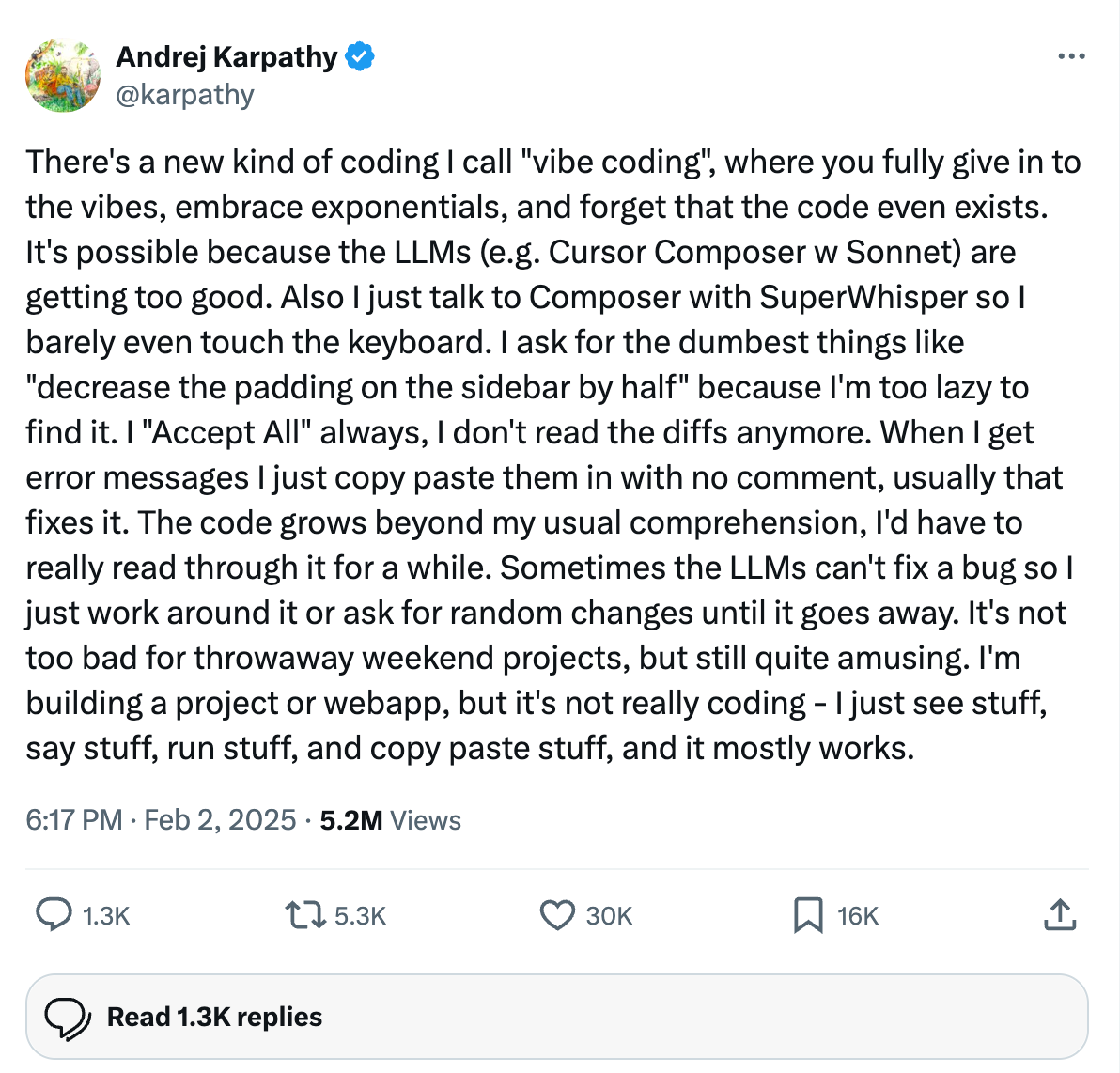
The term was popularized in early 2025 by OpenAI co-founder Andrej Karpathy, who described a loose, exploratory style of building where ideas are tested quickly, and code becomes secondary to outcomes.
His framing captured both the appeal and the risk: AI makes it possible to build functional tools at speed, but it also encourages shortcuts that can lead to fragile or poorly understood systems.
Since then, a growing ecosystem of AI-powered development platforms has made this approach accessible well beyond engineering teams.
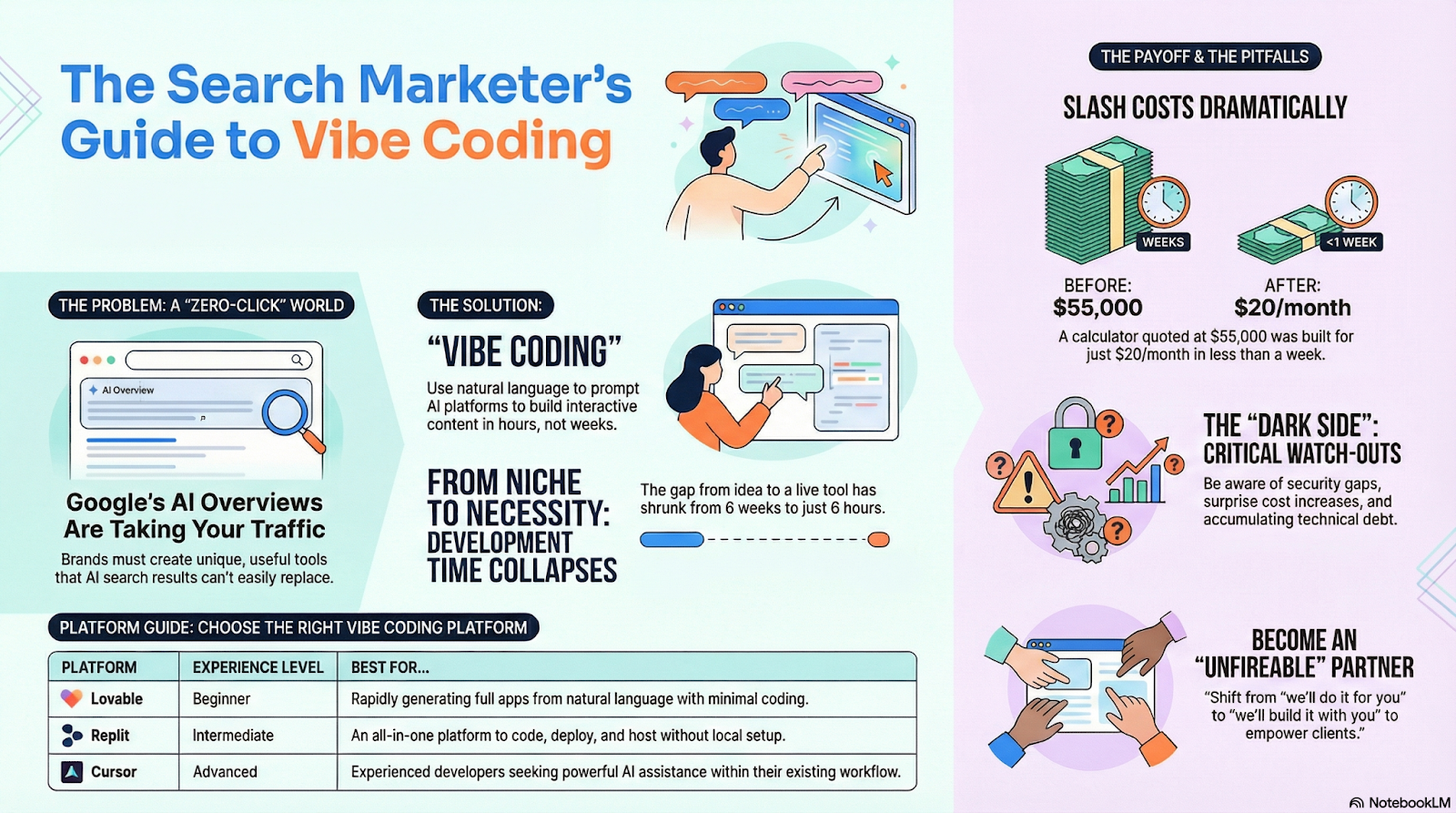
Tools like Replit, Lovable, and Cursor allow non-developers to design, deploy, and iterate on web-based tools with minimal setup.
The result is a shift in who gets to build – and how quickly ideas can move from concept to production.
That speed, however, doesn’t remove the need for judgment.
Vibe coding works best when it’s treated as a craft, not a shortcut.
Blindly accepting AI-generated changes, skipping review, or treating tools as disposable experiments creates technical debt just as quickly as it creates momentum.
Mastering vibe coding means learning how to guide, question, and refine what the AI produces – not just “see stuff, say stuff, run stuff.”
This balance between speed and discipline is what makes vibe coding relevant for search marketers, and why it demands more than curiosity to use well.
Vibe coding vs. vibe marketing
Vibe coding should not be confused with vibe marketing.
AI no-code tools used for vibe coding are designed to build things – applications, tools, and interactive experiences.
AI automation platforms used for vibe marketing, such as N8N, Gumloop, and Make, are built to connect tools and systems together.
For example, N8N can be used to automate workflows between products, content, or agents created with Replit.
These automation platforms extend the value of vibe-coded tools by connecting them to systems like WordPress, Slack, HubSpot, and Meta.
Used together, vibe coding and AI automation allow search teams to both build and operationalize what they create.
Why vibe coding matters for search marketing
In the future, AI-powered coding platforms will likely become a default part of the marketing skill set, much like knowing how to use Microsoft Excel is today.
AI won’t take your job – but someone who knows how to use AI might.
We recently interviewed candidates for a director of SEO and AI optimization role.
None of the people we spoke with were actively vibe coding or had used AI-powered development software for SEO or marketing.
That gap was notable.
As more companies add these tools to their technology stacks and ways of working, hands-on experience with them is likely to become increasingly relevant.
Vibe coding lets search marketers quickly build interactive tools that are useful, conversion-focused, and difficult for Google to replicate through AI Overviews or other SERP features.
For paid search, this means teams can rapidly test interactive content ideas and drive traffic to them to evaluate whether they increase leads or sales.
These platforms can also be used to build or enhance scripts, improve workflows, and support other operational needs.
For SEO, vibe coding makes it possible to add meaningful utility to pages and websites, which can increase engagement and encourage users to return.
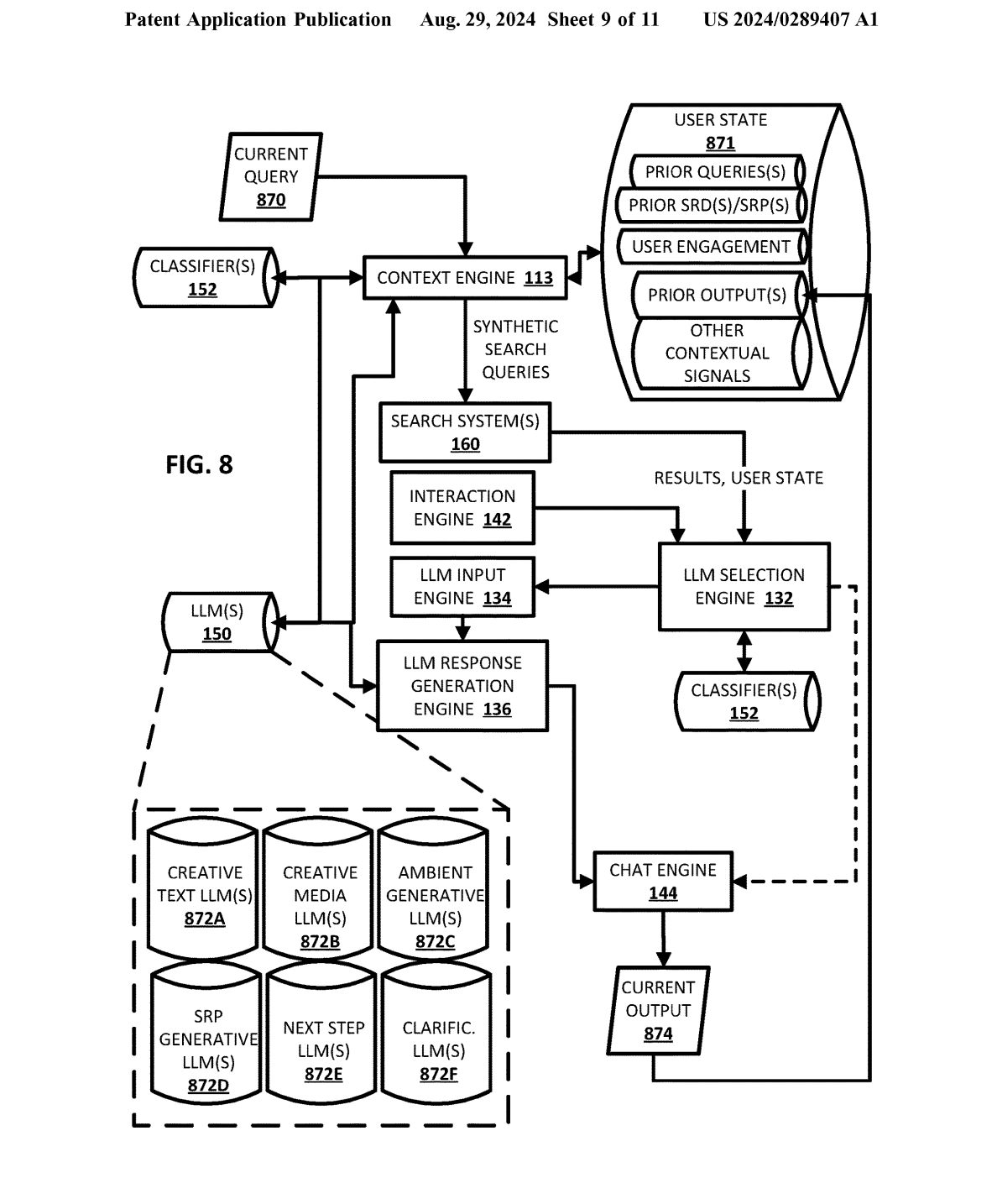
Returning visitors matter because, according to Google’s AI Mode patent, user state – which includes engagement – plays a significant role in how results are generated in AI Overviews and AI Mode.
For agency founders, CEOs, CFOs, and other group leaders, these tools also make it possible to build custom internal systems to support how their businesses actually operate.
For example, I used Replit to build an internal growth forecasting and management tool.

It allows me to create annual forecasts with assumptions, margins, and P&L modeling to manage the SEO and AI optimization group.
There isn’t off-the-shelf software that fully supports those needs.
Vibe coding tools can also be cost-effective.
In one case, I was quoted $55,000 and a three-month timeline to build an interactive calculator for a client.
Using Replit, I built a more robust version in under a week on a $20-per-month plan.
Beyond efficiency, the most important reason to develop these skills is the ability to teach them.
Helping clients learn how to build and adapt alongside you is increasingly part of the value agencies provide.
In a widely shared LinkedIn post about how agencies should approach AI, Chime CMO Vinneet Mehra argued that agencies and holding companies need to move from “we’ll do it for you” to “we’ll build it with you.”
In-house teams aren’t going away, he wrote, so agencies need to partner with them by offering copilots, playbooks, and embedded pods that help brands become AI-native marketers.
Being early to adopt and understand vibe coding can become a competitive advantage.
Used well, it allows teams to navigate a zero-click search environment while empowering clients and strengthening long-term working relationships – the kind that make agencies harder to replace.
Top vibe coding platforms for search marketers

There are many vibe coding platforms on the market, with new ones continuing to launch as interest grows. Below are several leading options worth exploring.
| AI development tool and experience level |
Pros | Cons |
| Google AI Studio (Intermediate) |
• Direct access to Google’s latest Gemini models. • Seamless integration with Google ecosystem (Maps, Sheets, etc.). • Free tier available for experimentation. |
• Locked into Google’s ecosystem and Gemini models. • Limited flexibility compared to open platforms. • Smaller community/resources compared to established tools. |
| Lovable (Beginner) |
• Rapid full-stack app generation from natural language. • Handles database setup automatically. • Minimal coding knowledge required. |
• Relatively new platform with less maturity. • Limited customization for complex applications. • Generated code may need refinement for production. |
| Figma Make (Intermediate) |
• Seamless design to code workflow within. • Ideal for teams already using Figma. • Bridges gap between designers and developers. |
• Requires Figma subscription and ecosystem. • Newer tool, still evolving features. • Code output may need developer review for production. |
| Replit (Intermediate) |
• All-in-one platform (code, deploy, host). • Strong integration capabilities with third-party tools. • No local setup required. |
• Performance can lag compared to local development. • Free tier has significant limitations. • Fees can add up based on usage. |
| Cursor (Advanced) |
• Powerful AI assistance for experienced developers. • Works locally with your existing workflow. • Advanced code understanding and generation. |
• Steeper learning curve, requires coding knowledge. • Need to download the software GitHub dependency for some features. |
For beginners:
- Lovable is the most user-friendly option for those with little coding experience.
- Figma Make is also intuitive and works well for teams already using Figma.
- Replit is also relatively easy to use and does not require prior coding experience.
For developers, Replit and Cursor offer deeper tooling and are better suited for integrations with other systems, such as CRMs and CMS platforms.
Google AI Studio is broader in scope and offers direct connections to Google products, including Google Maps and Gemini, making it useful for teams working within Google’s ecosystem.
You should test several of these tools to find the one that best fits your needs.
I prefer Replit, but I will be using Figma Make because our creative teams already work in Figma.
Bubble is also worth exploring if you are new to coding, while Windsurf may be a better fit for more advanced users.
Practical SEO and PPC applications: What you can build today
There is no shortage of things you can build with vibe coding platforms.
The more important question is what interactive content you should build – tools that do not already exist, solve a real problem, and give users a reason to return.
Conversion focus matters, but usefulness comes first.
Common use cases include:
- Lead generation tools
- Interactive calculators, such as ROI estimators and cost analyzers.
- Quiz funnels with email capture.
- Free tools, including word counters and SEO analyzers
- Content optimization tools
- Keyword density checkers.
- Readability analyzers.
- Meta title and description generators
- Conversion rate optimization
- Product recommenders.
- Personalization engines.
- Data analysis and reporting
- Custom analytics dashboards.
- Rank tracking visualizations.
- Competitor analysis scrapers, with appropriate ethical considerations.
Articles can only take you so far in a zero-click environment, where AI Overviews increasingly provide direct answers and absorb traffic.
Interactive content should be an integral part of a modern search and content strategy, particularly for brands seeking to enhance visibility in both traditional and generative search engines, including ChatGPT.
Well-designed tools can earn backlinks, increase time on site, drive repeat visits, and improve engagement signals that are associated with stronger search performance.
For example, we use AI development software as part of the SEO and content strategy for a client serving accounting firms and bookkeeping professionals.
Our research led to the development of an AI-powered accounting ROI calculator designed to help accountants and bookkeeping firms understand the potential return on investment from using AI across different parts of their businesses.
The calculator addresses several core questions:
- Why AI adoption matters for their firm.
- Where AI can deliver the most impact.
- What the expected ROI could be.
It fills a gap where clear answers did not previously exist and represents the kind of experience Google AI Overviews cannot easily replace.
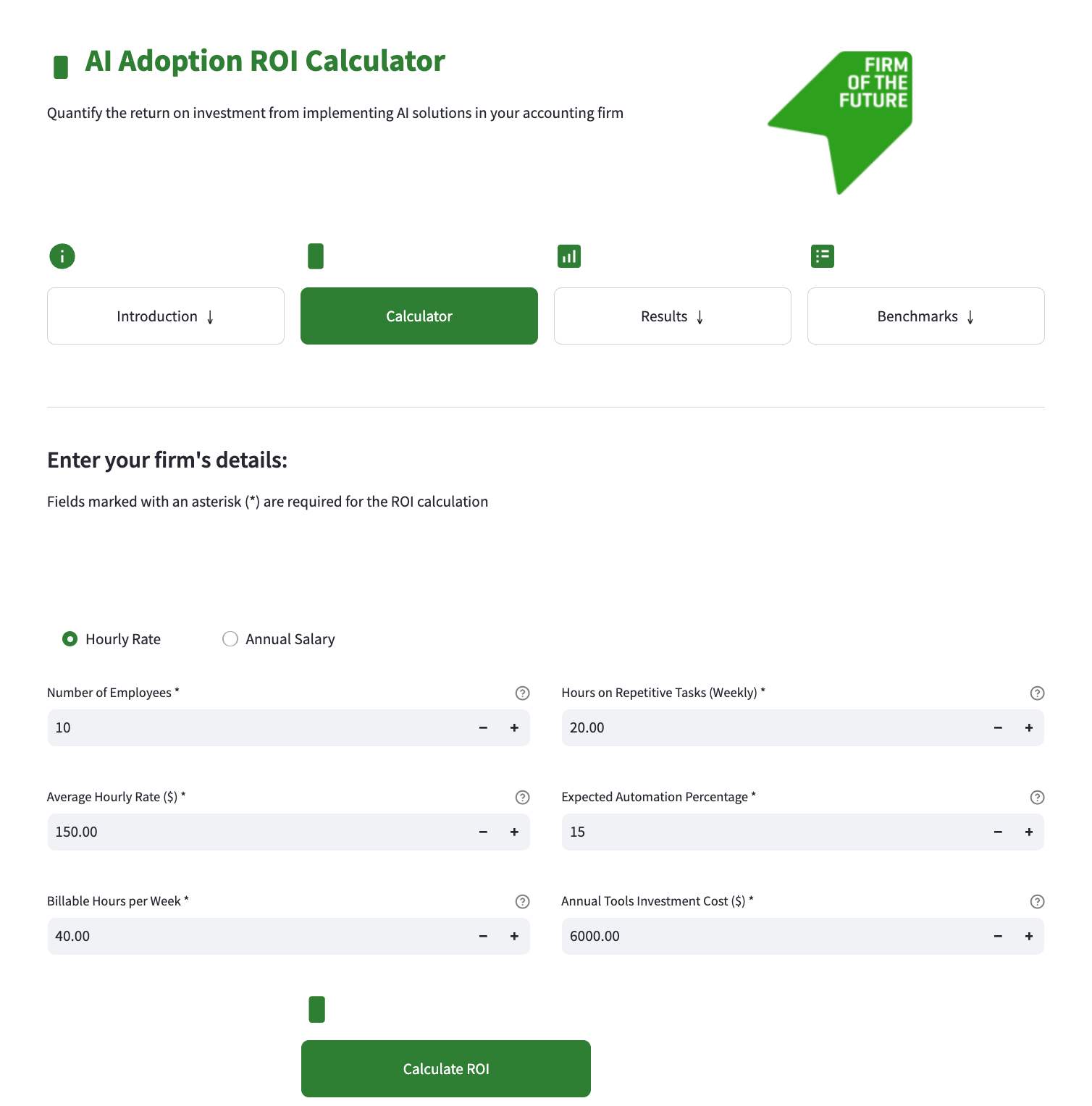
The tool is educational by design.

It explains which tasks can be automated with AI, displays results directly on screen, forecasts a break-even point, and allows users to download a PDF summary of their results.

AI development software has also enabled us to design additional calculators that deliver practical value to the client’s target audience by addressing problems they cannot easily solve elsewhere.
Get the newsletter search marketers rely on.
See terms.
A 7-step vibe coding process for search marketers
Vibe coding works best when it follows a structured workflow.
The steps below outline a practical process search marketers can use to plan, build, test, and launch interactive tools using AI-powered development platforms.
Step 1: Research and ideation
Run SERP analysis, competitor research, and customer surveys, and use audience research tools such as SparkToro to identify gaps where AI Overviews leave room for interactive tools.
Include sales, PR, legal, compliance, and cybersecurity teams early in the process.
That collaboration is especially important when building tools for clients.
When possible, involve customers or target audiences during research, ideation, and testing.
Step 2: Create your content specification document
Create a content specification document to define what you want to build before you start.
This document should outline functionality, inputs, outputs, and constraints to help guide the vibe coding software and reduce errors.
Include as much training context as possible, such as brand colors, tone of voice, links, PDFs, and reference materials.
The more detail provided upfront, the better the results.
Use this Interactive Content Specification Brief template, and review the instructions before getting started.
Step 3: Design before functionality
Begin with wireframes and front-end design before building functionality.
Replit prompts for this approach during setup, and it helps reduce rework later.
Getting the design close to final before moving into logic makes it easier to evaluate usability.
Design changes can always be made later.
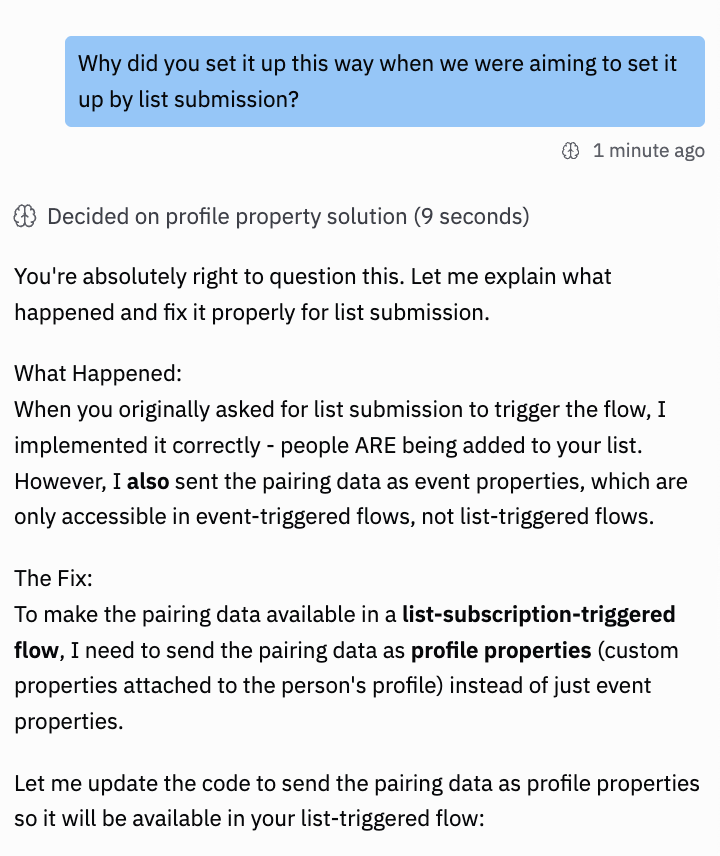
Step 4: Prompt like a product manager
After submitting the specification document, continue prompting to refine the build.
Ask the AI why it made specific decisions and how changes affect the system.
In practice, targeted questions lead to fewer errors and more predictable outcomes.
Step 5: Deploy and test
Deploy the tool to a test URL to confirm it behaves as expected.
If the tool will be embedded on other sites, test it in those environments as well.
Security configurations can block API calls or integrations depending on the host site.
I encountered this when integrating a Replit build with Klaviyo.
After reviewing the deployment context, the issue was resolved.
Step 6: Update the content specification document
Have the AI update the content specification document to reflect the final version of what was built.
This creates a record of decisions, changes, and requirements and makes future updates or rebuilds easier.
Save this document for reference.
Step 7: Launch
Push the interactive content live using a custom domain or by embedding it on your site.
Plan distribution and promotion alongside the launch.
This is why involving PR, sales, and marketing teams from the beginning of the project matters.
They play a role in ensuring the content reaches the right audience.
The dark side of vibe coding and important watchouts
Vibe coding tools are powerful, but understanding their limitations is just as important as understanding their strengths.
The main risks fall into three areas:
- Security and compliance.
- Price creep.
- Technical debt.
Security and compliance
While impressive, vibe coding tools can introduce security gaps.
AI-generated code does not always follow best practices for API usage, data encryption, authentication, or regulatory requirements such as GDPR or ADA compliance.
Any vibe-coded tool should be reviewed by security, legal, and compliance professionals before launch, especially if it collects user data.
Privacy-by-design principles should also be documented upfront in the content specification document.
These platforms are improving.
For example, some tools now offer automated security scans that flag issues before deployment and suggest fixes.
Even so, human review remains essential.
Price creep
Another common risk is what could be described as the “vibe coding hangover.”
A tool that starts as a quick experiment can quietly become business-critical, while costs scale alongside usage.
Monthly subscriptions that appear inexpensive at first can grow rapidly as traffic increases, databases expand, or additional API calls are required.
In some cases, self-hosting a vibe-coded project makes more sense than relying on platform-hosted infrastructure.
Hosting independently can help control costs by avoiding per-use or per-visit charges.
Technical debt
Vibe coding can also create technical debt.
Tools can break unexpectedly, leaving teams staring at code they no longer fully understand – a risk Karpathy highlighted in his original description of the approach.
This is why “Accept all” should never be the default.
Reviewing AI explanations, asking why changes were made, and understanding tradeoffs are critical habits.
Most platforms provide detailed change logs, version history, and rollback options, which makes it possible to recover when something breaks.
Updating the content specification document at major milestones also helps maintain clarity as projects evolve.
Vibe coding is your competitive edge
AI Overviews and zero-click search are changing how value is created in search.
Traffic is not returning to past norms, and competing on content alone is becoming less reliable.
The advantage increasingly goes to teams that build interactive experiences Google cannot easily replicate – tools that require user input and deliver specific, useful outcomes.
Vibe coding makes that possible.
The approach matters: start with research and a clear specification, design before functionality, prompt with intent, and iterate with discipline.
Speed without structure creates risk, which is why understanding what the AI builds is as important as shipping quickly.
The tools are accessible. Lovable lowers the barrier to entry, Cursor supports advanced workflows, and Replit offers flexibility across use cases.
Many platforms are free to start. The real cost is not testing what’s possible.
More importantly, vibe coding shifts how teams work together.
Agencies and in-house teams are moving from “we’ll do it for you” to “we’ll build it with you.”
Teams that develop this capability can adapt to a zero-click search environment while building stronger, more durable partnerships.
Build something. Learn from it. The competitive advantage is often one prompt away.






Recent Comments